

The false promise of digital menstrual cycle tracking in sport
Women’s sports are historically underfunded, understudied and deprioritized. Digital technology companies – like Fitr Woman – claim to offer a solution. By using digital apps to track their menstrual cycle, they suggest, women athletes and their coaches can leverage data to optimize their performances and minimize injury risk, thereby helping redress the effects of decades of sexist inequities. Cycle tracking has even been embraced by some elite sporting groups, such as the U.S. Women’s National Soccer Team.

The Rise and Risks of Digital Menstrual Tracking
The GenderSci Lab has a new paper out in The BMJ, a collaboration between the GenderSci Lab and scholars in sports science and exercise medicine. The paper emerged from an international workshop hosted by the Lab at Harvard’s Radcliffe Institute for Advanced Study in 2025, where participants discussed emerging trends in the field of female athlete health.

Using gender/sex information to make clinical decisions: How, why, and with what consequences?
In a peer-reviewed paper recently published in Health Affairs, members of the GenderSci Lab collaborated with colleagues at the Harvard School of Public Health, Harvard Medical School, Harvard Law School, Harvard Faculty of Arts and Sciences, and Swarthmore College to offer the first systematic analysis of the use of gender/sex related variables in clinical algorithms across medical specialties. Through the examination of 602 existing clinical algorithms, we document the extent to which gender/sex variables are included in these tools, how they are used, and with what consequences for patient care.

New Video and Paper: Tying together GSL’s research program on gender and sex disparities in adverse drug events
The danger of women’s greater vulnerability to adverse drug events (ADEs) looms large in public consciousness, popular media, and scientific research. Yet, as a series of GenderSci Lab studies over the past four years have shown, biological explanations for this sex disparity rest on flawed empirical evidence, fraught regulatory processes, and media hype. We are excited to tie a bow on this research program with a new video explainer and a commentary in Women's Health Issues published last month that summarize our findings.
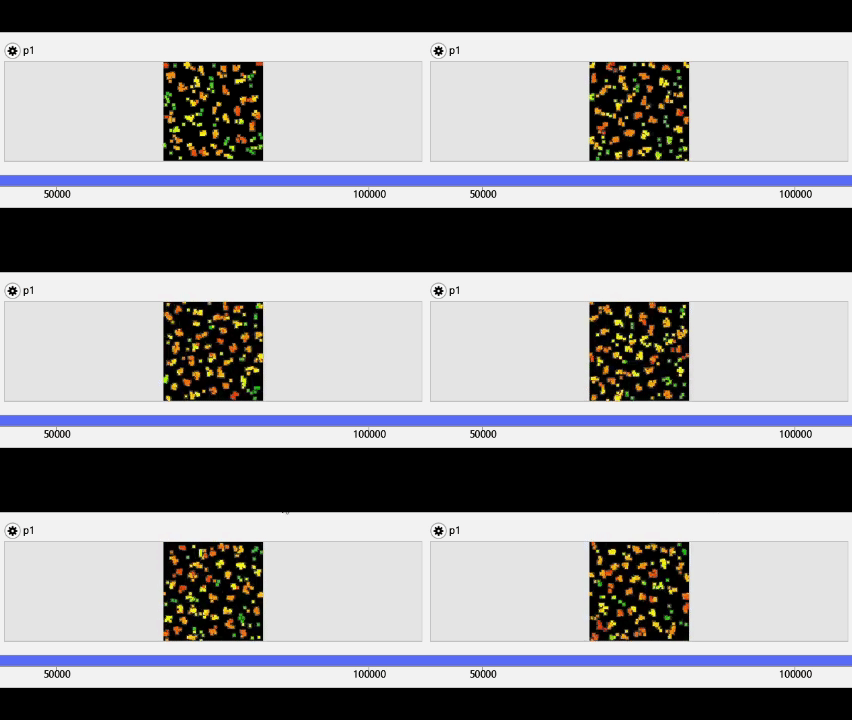
GSL Paper Explainer: Using simulations to demonstrate the importance of considering variation within sexes in genetics
In a new paper in the American Journal of Human Biology by Mia Miyagi, Sarah Richardson, and Emilia Huerta-Sánchez from the Center for Computational Molecular Biology at Brown, we explore the effect of variation within a sex on these inference methods and use simulations to demonstrate that this variability can affect common variables used to quantify the sex ratio of migration events. Our results highlight that modeling individuals of the ‘same’ sex as interchangeable can have quantitative consequences and represent an application of sex contextualist principles to an open area of research in human biology.
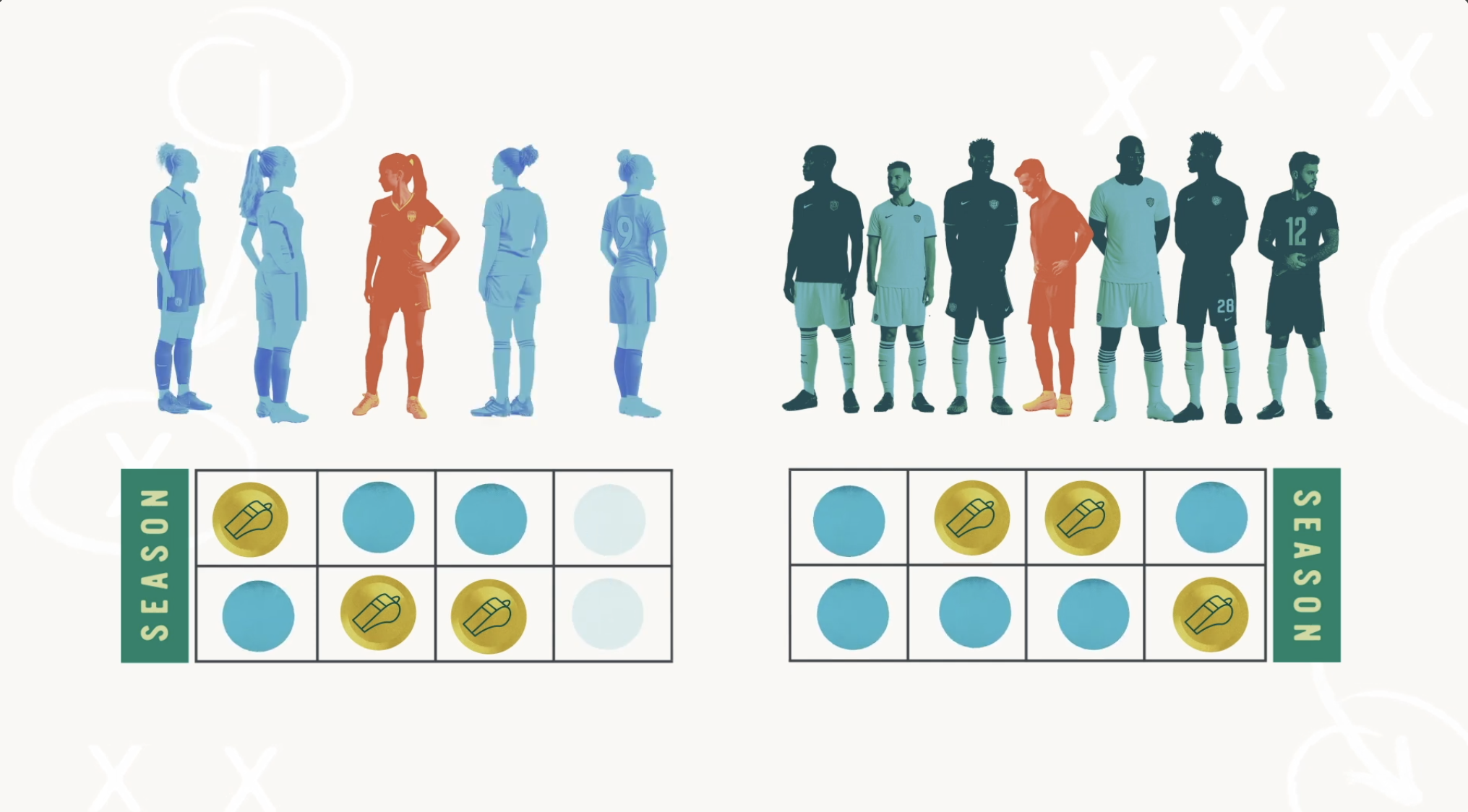
New Video: Gender Inequities in Sports and ACL Injury Risk
As the 2026 Winter Olympics kick off with projected record-setting representation of women athletes, the GenderSci Lab is excited to share a video explainer of how gendered social factors contribute to a higher risk of injury for women athletes.
Using animations and short interviews with GenderSci Lab researchers, the video unpacks our recent research paper in the British Journal of Sports Medicine demonstrating how factors related to the history of underinvestment in women's sport such as smaller team sizes and lower ratios of practice to competition time may drive observations of higher rates of ACL injuries in women athletes.
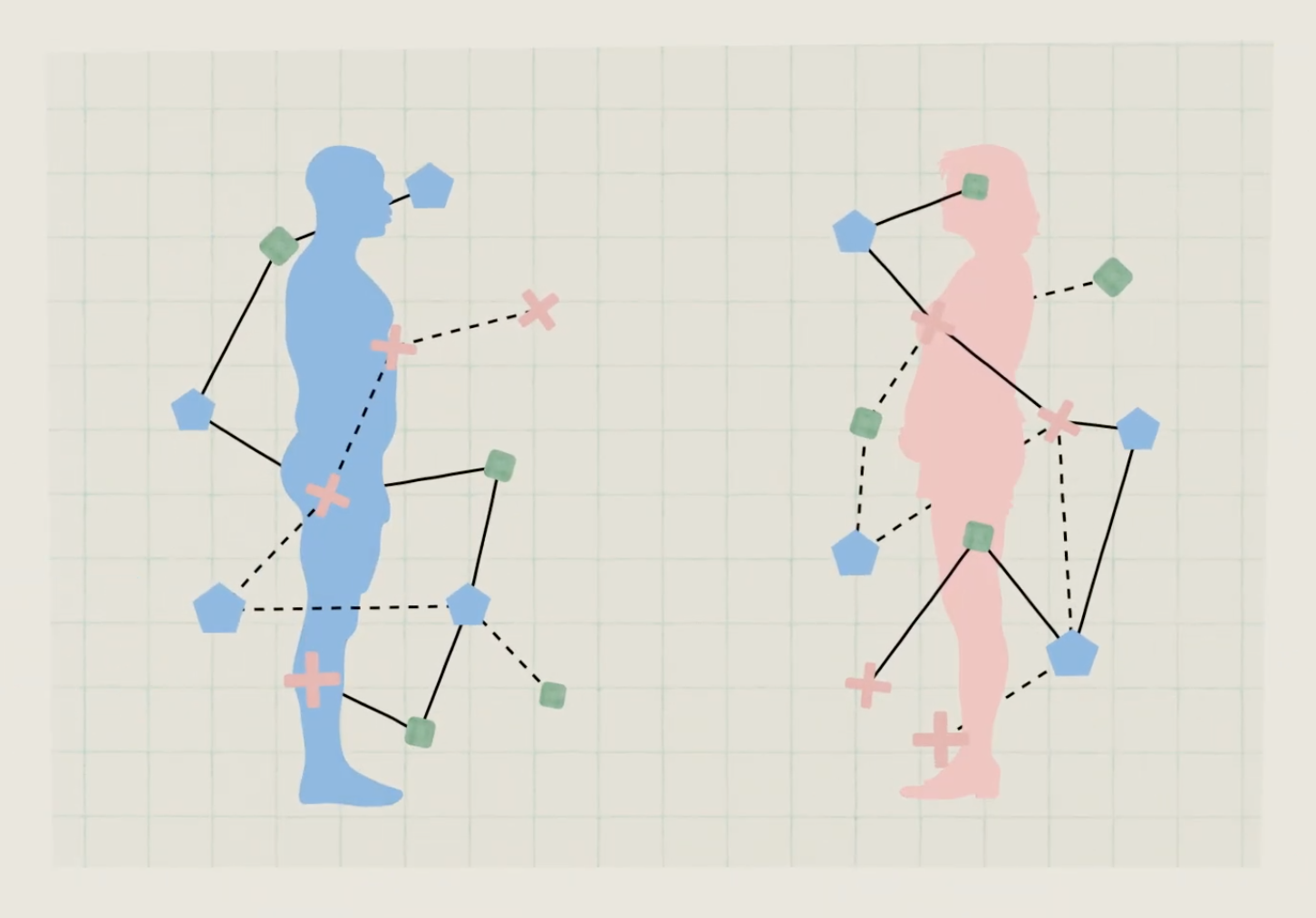
Sex in the Medical Machine: The GenderSci Lab Analyzes the Algorithmic Future of Sex-Based Medicine
In a peer-reviewed paper recently published in Big Data and Society and led by Kelsey Ichikawa and Marion Boulicault, GenderSci Lab members explore the use of sex stratification in applications of machine learning in medical research and argue that current practices risk embedding biological sex essentialist assumptions into medical science. These practices include the creation of distinct algorithms for males and females (what we call “pink and blue algorithms”), the use of machine learning to identify distinct male and female patterns in disease, and the incorporation of gender/sex variables as predictors in algorithms for disease risk and detection.

Science without Sex Essentialism? As Easy as 1, 2, 3!
Over the course of nearly a decade, the GenderSci Lab (GSL) has developed incisive analyses, approaches, frameworks, and methods for thinking critically about sex and gender in biomedicine. Our new article “Three Maxims for Countering Sex Essentialism in Scientific Research” in the journal Biology of Sex Differences synthesizes lessons from GSL research into concrete and portable recommendations for biomedical researchers. Through the examples of gender/sex disparities in adverse drug events, COVID-19, and anterior cruciate ligament (ACL) injury, we offer guidance for avoiding the pitfalls of sex essentialism and producing better science. The article is designed for researchers, reviewers, and editors aiming to produce more rigorous science as well as for instructors and students at the undergraduate or graduate level interested in exploring common problems in sex essentialist research.

Riddles of Sex Difference Science: Q&A with Sarah Richardson
In a new open access article recently published in the journal Philosophy, Theory, and Practice in Biology, GenderSci Lab Director Sarah Richardson extends and develops her framework of “sex contextualism” (Richardson 2022). In this Q&A for the GenderSci Lab blog, Richardson digs into sex contextualism, the “riddle of variability,” and implications for research design, policy, and public understanding of sex difference science:

Femtech, Venture Capital, and the Rise of Investment Feminism: Forthcoming in Signs
A new piece from the GenderSci Lab is forthcoming in Signs. Authored by Jamie Marsella, Marina DiMarco, Abigail Higgins, Sarah Richardson, and Joseph Bruch, this piece introduces the concept of “investment feminism” and the ways venture capital, femtech, and women’s health are intertwined.

Gender inequities in sporting environment and resources may distort estimates of sex differences in ACL injury rates
This week, members of the GenderSci Lab published a new piece in the British Journal of Sports Medicine. Authored by Annika Gompers, Ann Caroline Danielsen, and Sarah Richardson, this piece delves into how the gendered realities of women and men’s sports could affect how injury rates are captured.

Q & A with Marion Boulicault
We sat down to talk with Marion Boulicault, who recently became an Assistant Professor of Philosophy at the University of Edinburgh. Marion is the Director of Interdisciplinary Research and Community at the GenderSci Lab.

Live Event: Sarah Richardson and Keolu Fox, “Unscripted: Candid Conversations About the Future of Research”
What bold approaches can we take to rethink how we create and use health information?
Tune in on October 25 for RWJF’s Unscripted series to learn from Sarah Richardson and Keolu Fox about challenging the research status quo and moving closer to health equity.

GSL Pens Comment on AMA’s Draft Guidance on Reporting Gender & Sex
This September, members of the GenderSci Lab collectively drafted a letter to the subcommittee of the Journal of the American Medical Association tasked with developing and releasing guidelines for scientists related to reporting gender and sex.

The GenderSci Lab is Recruiting New Research Assistants for Fall 2024
The GenderSci Lab is seeking research assistants for Fall 2024! *Open to Harvard College students only*

A History of Sex, Gender, and Medical Expertise in the New England Journal of Medicine
This week, members of the GenderSci Lab published a new piece in the New England Journal of Medicine. Authored by the Lab’s historians of medicine and science, Ben Maldonado, Jamie Marsella, Abbie Higgins, and Sarah Richardson, this piece traces how authors in the Journal articulated harmful ideas of innate sex difference.

GenderSci Lab 5-Year Anniversary Open House
On April 10, the GenderSci Lab hosted an open house to celebrate our 5th year anniversary and our new space in the Harvard Science Center!

GSL Postdoc Talk: Queering the Study of Primate Skeletons
Come to this talk by postdoctoral fellow Dr. Alexandra Kralick about her research on orangutan skeletons.

New article in Cell: Calling for Rigor and Precision in the Study of Sex-Related Variables
Our piece in this Cell special issue considers how, in the context of policies mandating the consideration of sex (such as the NIH’s Sex as a Biological Variable policy), basic scientists can operationalize, analyze, and interpret sex-related variation in ways that achieve conceptual and statistical rigor, as well as precision in how such knowledge is applied in the clinic and beyond.

The GenderSci Lab is recruiting a Postdoctoral Fellow!
We are recruiting for a 2-year postdoctoral associate for an NSF-funded project about operationalizations of sex in laboratory science! We especially welcome applications from philosophers of biology, life scientists or biomedical researchers with philosophy or science and technology studies (STS) training, and sociologists of science.