

Q&A with Katharine Lee
We sat down to talk with Katie Lee, who recently became an Assistant Professor of Anthropology at Tulane University. Katie has been an active member of GSL for several years and provides useful insight from her gender studies, bioanthropology, and engineering background.

Two new GenderSci Lab articles: Social factors, rather than biological ones, drive higher numbers of adverse drug events in women
The GenderSci lab has a new article out this week in Social Science and Medicine entitled “A Gender Hypothesis of sex disparities in adverse drug events,” which builds on findings from an article released in JAMA Network Open earlier this fall: “Adverse Drug Events by Sex After Adjusting for Baseline Rates of Drug Use.”

New article: “Making a ‘Sex-Difference Fact’”
This week, the GenderSci Lab has a new paper out in Social Studies of Science, “Making a ‘Sex-Difference Fact’: Ambien Dosing at the Interface of Policy, Regulation, Women’s Health, and Biology (open access).” The paper analyzes the first drug ever to be issued with an FDA mandated differential dose for men and women on the drug’s label.

GSL in The Lancet: Women’s Health, Inc.
While growing financial investment in “women’s health” has been celebrated by many as a victory for women and a sign of progress within the healthcare system, we challenge this idea in our new Lancet perspective “Women’s Health, Inc.”

Call for Applications: GenderSci Lab hiring a 2023-2025 postdoctoral fellow
The Harvard GenderSci Lab invites applications for a Postdoctoral Fellow in Gender and Science. The postdoc will contribute to a Robert Wood Johnson Foundation funded project entitled “Accelerating the integration of social factors into sex-related health disparities science.”

Q&A with Joseph Bruch
We sat down to talk with Joe Bruch, who recently became a professor of public health sciences at The University of Chicago. Joe has been an active member of GSL since its founding and directs the Health Care Finance team.

GSL Pens Public Comment on Federal Evidence Agenda for LGBTQI+ Equity
This September, members of the GenderSci Lab collectively drafted a letter to the subcommittee tasked with developing and releasing a Federal Evidence Agenda on LGBTQI+ Equity.

New paper in Science: GenderSci Lab calls for accountable science on sex in light of rising appeals to scientific authority in discriminatory law and policy
In this Friday’s issue of Science the GenderSci Lab has a peer-reviewed Policy Forum article,“Law, Policy, Biology, and Sex: Critical Issues for Researchers.” In this explainer, we provide additional background and context on this piece, and answer common questions.

New article: GenderSci Lab Examines the Tensions Between “Sex as a Biological Variable” Mandates and Precision Medicine Initiatives
Today, the GenderSci Lab has a new commentary out in Cell Reports Medicine, which argues that mandates to make male-female sex comparisons in all areas of biomedical research conflict with precision medicine’s goal of individualized and targeted treatments.

Research Handout for Scientists: When and how can you apply sex contextualism in your own research?
To help bring sex contextualist frameworks into the laboratory, we wrote this condensed, portable, 1-page document that answers common questions about sex contextualist approaches in experimental design, execution, and reporting.

No Sex Without Context: A Q&A with Sarah Richardson on “Sex Contextualism”
Recently lab director Sarah Richardson published a paper proposing sex contextualism as a new model for conceptualizing and operationalizing sex in biomedical research. We take a moment to unpack sex contextualism with Sarah, digging into both the substance and the implications of her argument.

New Teaching Tool from GSL about Sex Contextualism
GSL made a teaching slidedeck that walks through the central ideas of Richardson’s paper “Sex Contextualism,” with the aim of equipping students with critical tools for understanding sex contextualism as a conceptual and practical framework and why it matters.

How to Be an Anti-Eugenicist
In her recent sociogenomics manifesto The Genetic Lottery, Kathryn Paige Harden sets out to rescue behavior genetics from the spectres of racism and eugenics. Harden portrays eugenics much like a trait in a pedigree chart: passed on from eugenicist to eugenicist, predictably uniform, easily traceable, and unchanging over time. To promote her monolithic portrayal of eugenics, Harden’s narrative is simple and obfuscates the complexities that have allowed eugenics to survive - even flourish - within the field of genetics.

New Paper: COVID-19 sex disparities differ dramatically across U.S. states and over time, pointing to social factors
New and out from the GenderSci Lab this week in the journal Social Science and Medicine is a comprehensive paper characterizing extensive heterogeneity in COVID-19 sex disparities over time and across states in the U.S. The paper is the first longitudinal study to quantify variation in COVID-19 gender/sex disparities across U.S. states.

Explainer: The Limitations of Case Fatality Rates for Measuring Sex Disparities
Through what methods would we know whether COVID-19 deadlier for men than for women? In a new commentary just out in Women’s Health Issues, the GenderSci Lab examines the limitations of case fatality rate (CFR) as a metric for studying sex disparities in COVID-19 outcomes.
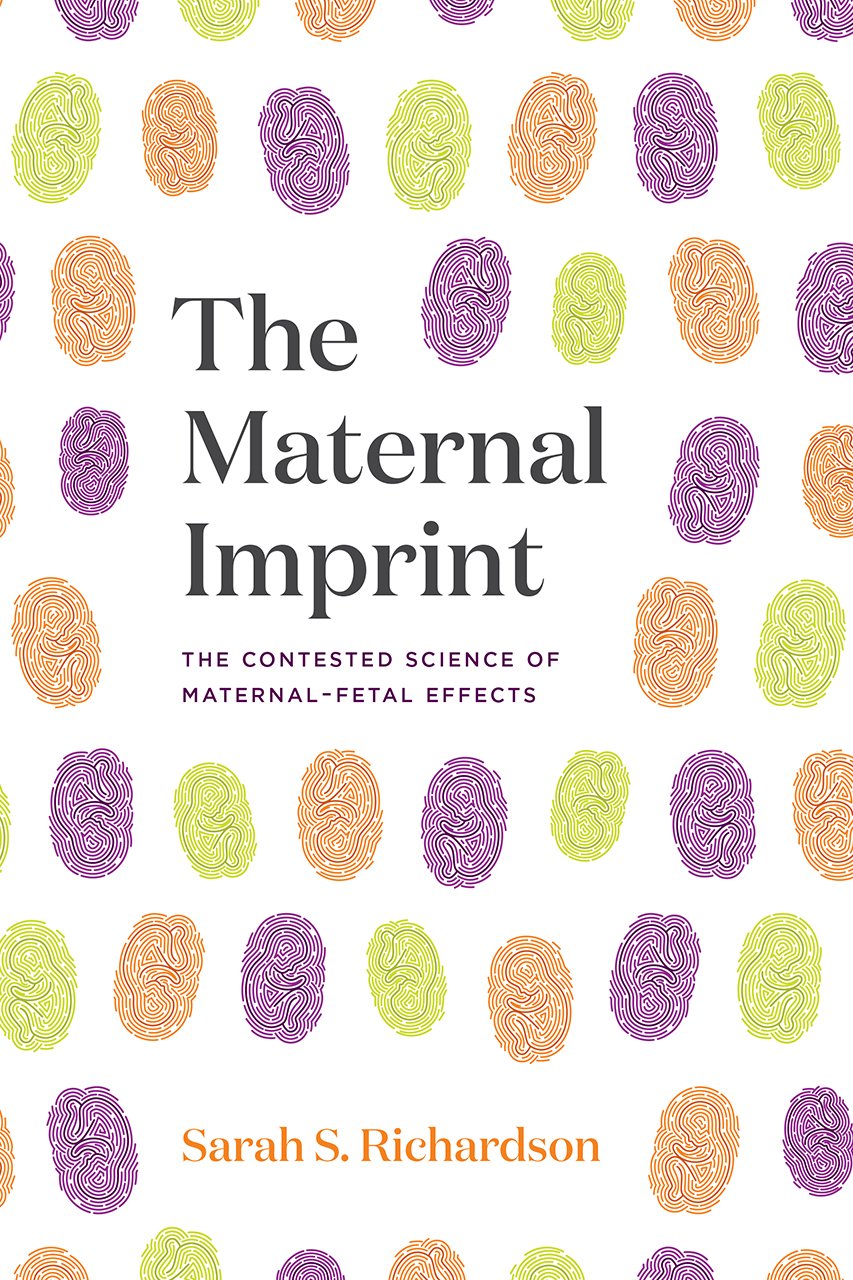
New Book from Lab Director Sarah Richardson: The Maternal Imprint
A thorough history of scientific ideas about the long reach of the womb in which you are gestated, Richardson’s book breaks new ground, challenging the reader to rethink much of what they have so often been told about the relationship between a pregnant person and their fetus.

Explainer: Our New Paper Exploring the Implications of Private Equity Acquisitions in Fertility Industry for Patients
Our new study evaluated the prevalence and performance of private equity-owned fertility clinics in the United States. This study is the first to quantify the extent to which private equity is acquiring swaths of the fertility industry.

How did a small COVID-19 sex difference study with largely negative findings become framed as a "Battle of the Sexes"?
Below we explore how the authors of the 2020 Nature paper helped frame this small COVID-19 sex difference study as an unsubstatiated “Battle of the Sexes” in the popular press.

No Evidence for a Sex Difference in Immune Response to COVID-19: An Explainer of the GenderSci Lab’s Nature Matters Arising Article
In our Matters Arising piece, we aren’t just arguing that there are some small issues with the original paper. We argue that its core claim is completely unsubstantiated: that the Takahashi et al. study does not, in fact, demonstrate that biological sex explains differences in COVID-19 patient outcomes.

Introducing a new state “Report Card” & The First New Report Card: Results from April 2021
The GenderSci Lab has decided to update our report card parameters, so that we now track states’ reporting of gender/sex interactions for three outcome variables (age, race/ethnicity, and comorbidities), plus nonbinary gender. Here we unveil our first report card in this new iteration, from April 2021.