
GenderSci Lab Methods Toolkit
The GenderSci Lab employs a range of critical and generative methods in our work—and we want to share these approaches with you!
The considerations provided on this page can be flexibly applied to a wide range of projects and disciplines. While the content here does not encapsulate all of the methods used by the GenderSci Lab, we believe that these maxims are a vital starting points for more rigorously designing, conducting, and/or interpreting scientific research on gender/sex disparities.
If you would like assistance on how to apply these tools to your own work, or have additional questions, please feel encouraged to reach out to us by through our feedback form at the end of the page.
Navigate to:
Three Maxims for Countering Sex Essentialism
We offer a practical framework for auditing your own research for sex essentialism. We propose three key questions to ask when you design a study, review a manuscript, or evaluate a sex-difference claim, drawn from our 2025 paper in Biology of Sex Differences.
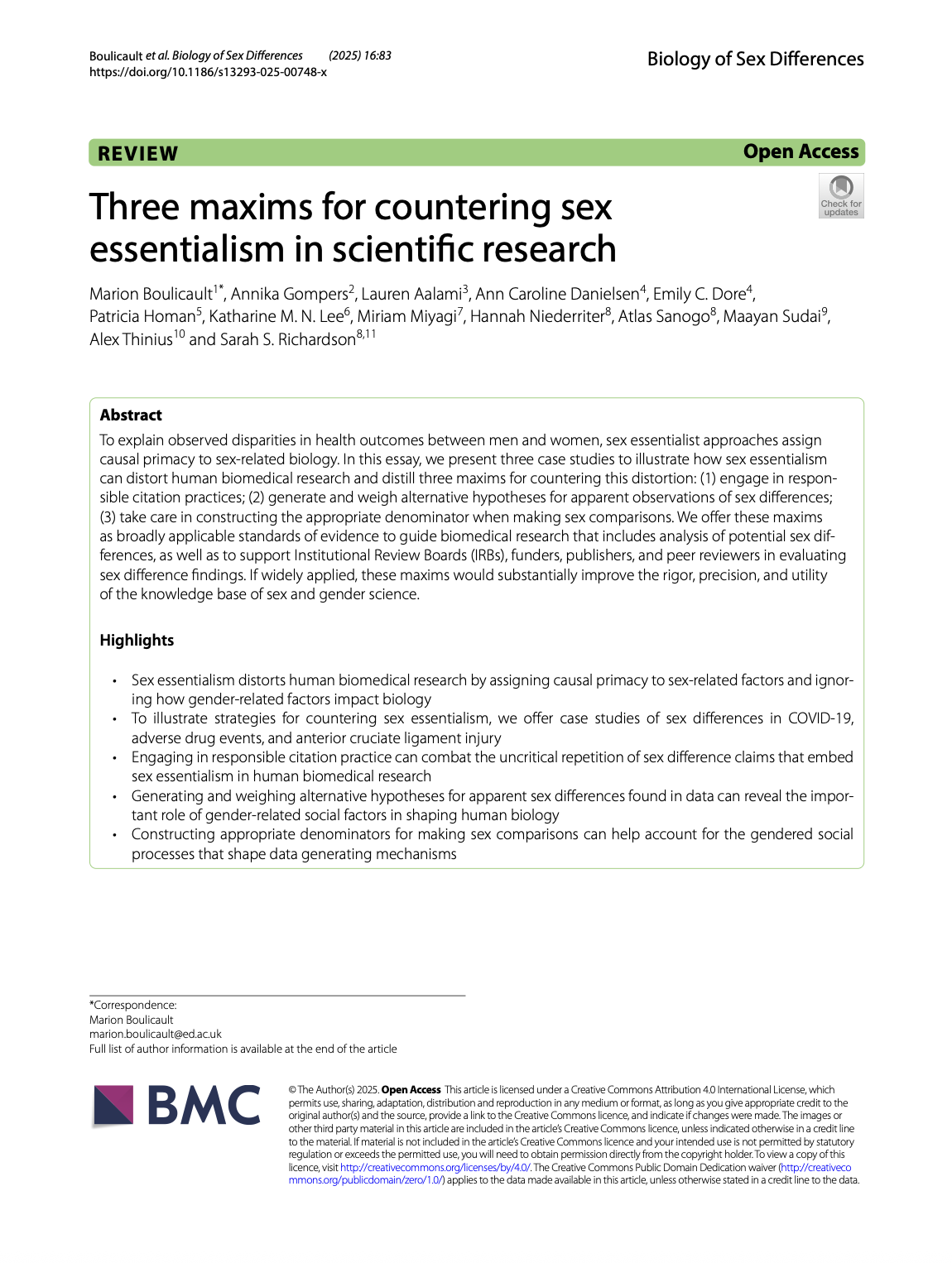
Three maxims for countering sex essentialism in scientific research
SUGGESTED PAPER CITATION
Boulicault, M., Gompers, A., Aalami, L., Danielsen, A. C., Dore, E. C., Homan, P., Lee, K. M. N., Miyagi, M., Niederriter, H., Sanogo, A., Sudai, M., Thinius, A., & Richardson, S. S. (2025). Three maxims for countering sex essentialism in scientific research. Biology of Sex Differences, 16, Article 83. https://doi.org/10.1186/s13293-025-00748-x
How to Apply Our Maxims:
Before you cite a sex-difference finding, trace it.
Have I read the original source, or am I citing a citation of a citation?
____________________________________________
Does this claim rest on well-powered, replicated evidence or a single decades-old study?
____________________________________________
Have I looked for critiques or failed replications, and am I citing those too?
____________________________________________
If I traced this claim back through its citation chain, would it still hold up?
MAXIM 1
Practice responsible
citation
Before you attribute a finding to biology, test that assumption.
What gender-related social or structural factors could produce this same pattern?
____________________________________________
Does the disparity vary by time, place, or group in ways pure biology wouldn't predict?
____________________________________________
Have I controlled for plausible confounds (age, body size, access, reporting behavior)?
____________________________________________
Have I actually weighed competing explanations, or defaulted to the biological one first?
MAXIM 2
Generate and weigh
alternative hypotheses
Before you calculate a sex disparity, interrogate the data.
What population is actually "at risk" for the outcome I'm measuring? Does it differ by gender in ways that affect my rate?
____________________________________________
Am I using an aggregate denominator that could mask meaningful within-group variation?
____________________________________________
If I rebuilt my denominator to reflect true exposure, would my disparity finding still hold?
____________________________________________
Whose data-generating behavior (testing, reporting, seeking care) shaped this denominator?
MAXIM 3
Mind the denominator
Three Maxims Frequently Asked Questions
-
Both, ideally. Maxim 1 (“Practice responsible citation”) and Maxim 3 (“Mind the denominator”) are most useful during the design stage before you have committed to a measure. Maxim 2 (“Generate and weigh alternative hypotheses”) matters in both design and interpretation. Plan for Maxim 2 in the beginning, but also revisit Maxim 2 before you write up a "sex difference" finding.
-
The case studies are biomedical, but the underlying maxims of (1) tracing your citations, (2) considering social explanations as well as biological ones, and (3) checking your denominator generalize to any field comparing outcomes by sex or gender (e.g., psychology, sociology, education research).
-
No. The maxims are meant to make sex-difference research more rigorous rather than to entirely discourage such studies.
-
Yes. Our paper is published open access in Biology of Sex Differences under a CC BY 4.0 license. It is free to read, download, and adapt with attribution.
Gender/Sex Disparities in COVID-19 Outcomes
Data suggest that, in aggregate, men are dying from COVID-19 at higher rates than women. How can we interpret and make sense of this disparity? This analytical toolkit provides resources for unpacking and understanding apparent sex disparities in COVID-19 outcomes. Students are challenged to think critically about the causal primacy granted to biological sex in attempts to explain the gender/sex gap in COVID-19 mortality. Additionally, the toolkit offers a variety of social and demographic factors as alternative ways of understanding, investigating, and talking about inequities in the COVID-19 pandemic.
STATEMENT OF INTELLECTUAL LABOR
The “Gender/Sex Disparities in COVID-19 Outcomes” teaching tools grow out of our Gender/Sex and COVID-19 Project, and reflect months of research and labor by the whole lab. Ann-Caroline Danielsen conceived and led the teaching tool project, drawing up the initial draft, integrating lab member comments and edits during the revision process, and drafting the guide and blog post, in close collaboration with Sarah Richardson and Heather Shattuck-Heidorn, who advised the project. Capri D’Souza, Nicole Noll, Mimi Tarrant, and Helen Zhao helped develop the overall plan and objectives of the teaching project. Many people contributed to the content, visual design, and drafting and revision process, including Danielsen, Richardson, Shattuck-Heidorn, Marion Boulicault, D’Souza, Annika Gompers, Katie Jillson, Noll, Meg Perret, Tamara Rushovich, Tarrant, and Zhao. Juanis Becerra helped format the final presentation and developed a dissemination plan for the teaching tool.
Introduction and User Guide
The user guide provides an introduction to the teaching materials and specific guidance for instructors for adapting the teaching presentation to different classroom contexts and conducting breakout activities. A detailed presentation outline, terminology guide, and timing estimates for each section of the presentation are included in the user guide. We also offer suggestions for assigned readings to pair with the presentation.
SUGGESTED USER GUIDE CITATION
GenderSci Lab. (2020). Introduction and user guide. https://www.genderscilab.org/gendersci-lab-methods-toolkit
Teaching Slide Deck
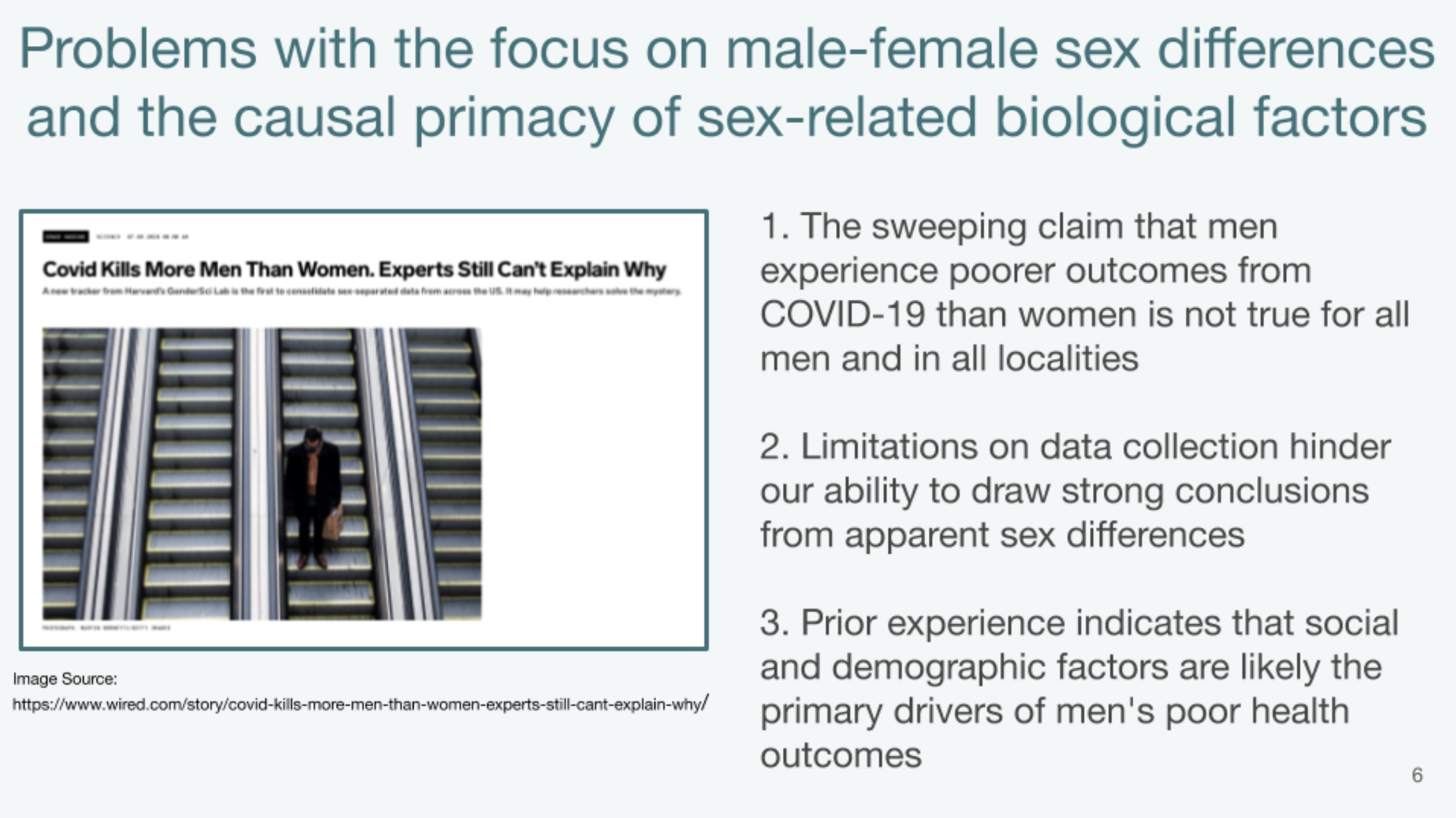
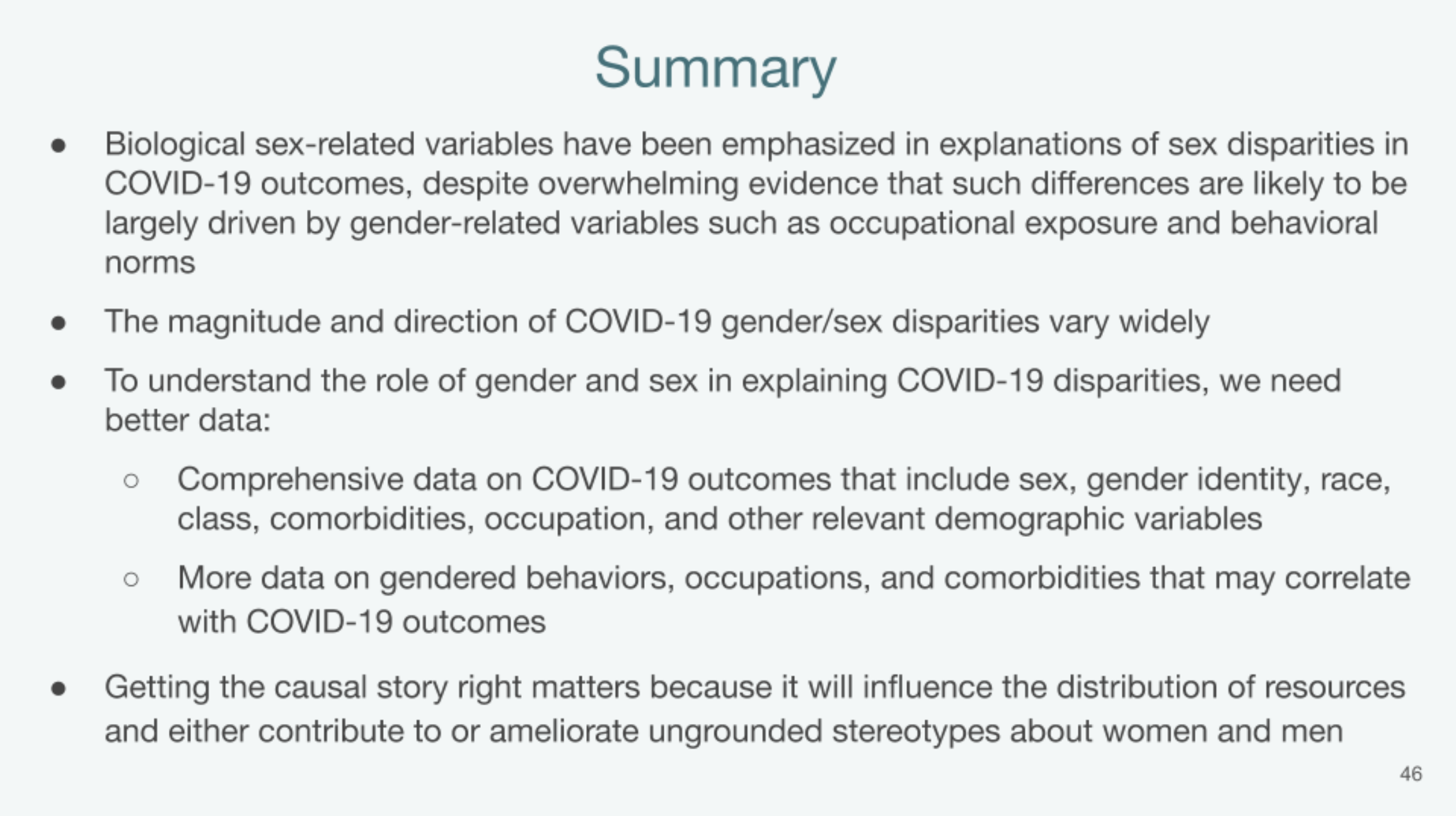
The teaching presentation provides an analytical toolkit for unpacking apparent sex disparities in COVID-19 outcomes. The presentation leads students through a series of questions about the causal primacy granted to biological sex in attempts to explain the gender/sex gap in COVID-19 mortality. Gender and other social and demographic factors are offered as an alternative way of understanding, investigating, and talking about inequities in the COVID-19 pandemic.
Data and case examples are drawn from the United States, but the analytical principles illustrated in the teaching toolkit can be applied to query sex disparities in COVID-19 outcomes in other contexts.
SUGGESTED GENERAL SLIDE DECK CITATION
GenderSci Lab. (2020). Gender/sex disparities in COVID-19 outcomes: A guide and toolkit by Harvard University’s GenderSci Lab. https://www.genderscilab.org/gendersci-lab-methods-toolkit
FOR CITING SELECTED SLIDES ONLY
GenderSci Lab. (2020). Gender/sex disparities in COVID-19 outcomes: A guide and toolkit by Harvard University’s GenderSci Lab (Slides x, y, z). https://www.genderscilab.org/gendersci-lab-methods-toolkit
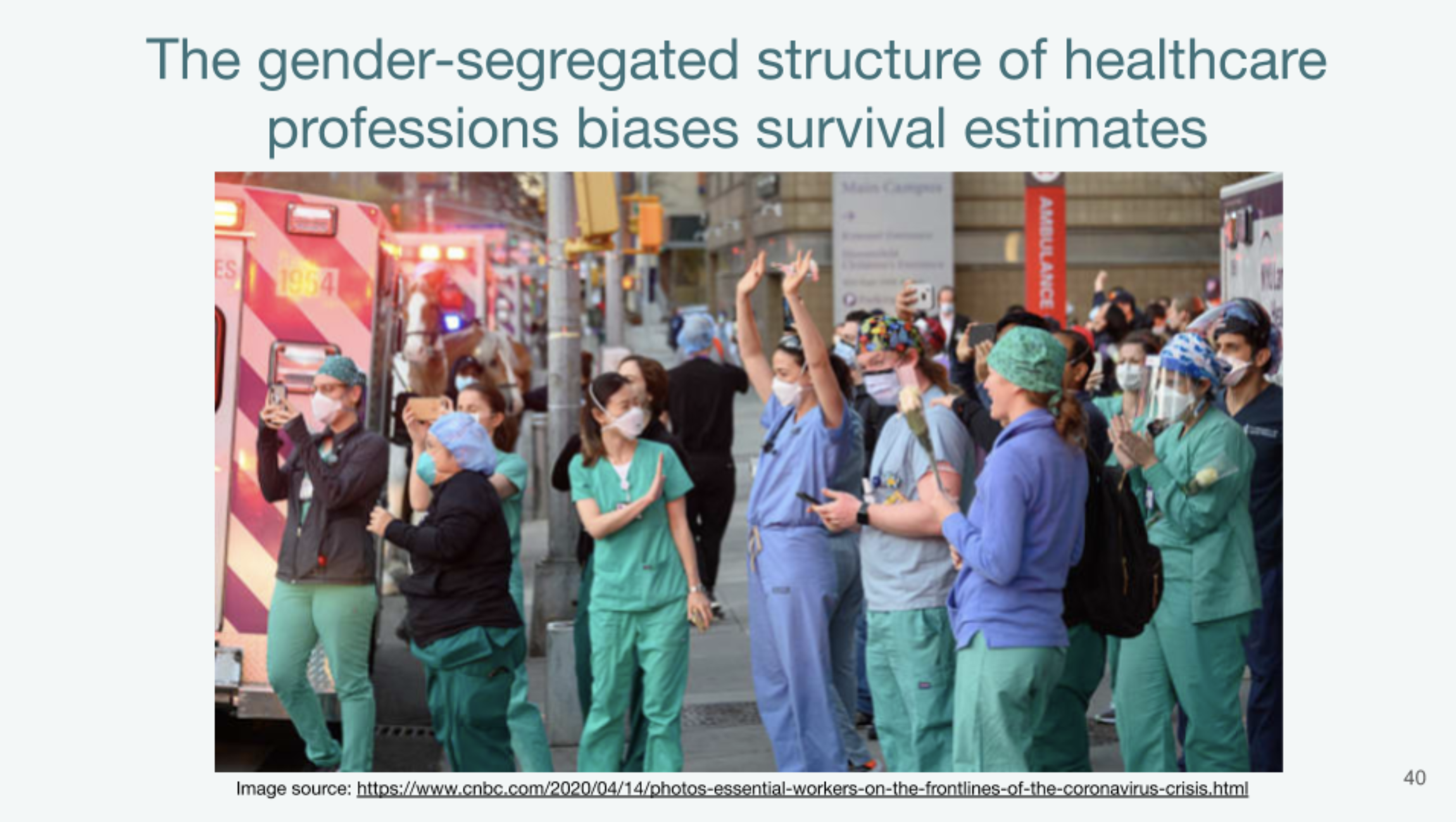
Using the slides: please don’t alter them after download. If you use only a portion, keep the GenderSci Lab logo and cite appropriately.
STATEMENT OF INTELLECTUAL LABOR
Sarah Richardson wrote this teaching module using materials from her own presentations and a presentation that Marina DiMarco, Mia Miyagi, and Kelsey Ichikawa created. Kelsey Ichikawa formatted and captioned the module and wrote this blog introduction that this teaching module took inspiration from.
Why teach about COVID-19 sex
disparities through a critical lens?
A focus on biological sex may underplay the contribution of gender-related and other social factors to COVID-19 disparities, misdirecting public health efforts. An additional concern is that decontextualized statistics about sex differences in cases and deaths from COVID-19 can reinforce biological sex-essentialist stereotypes.
Both biological and social factors, and interactions between the two, may play a role in shaping the observed patterns of COVID-19 outcomes. Discussions of sex disparities in COVID-19 outcomes often emphasize biological factors, even suggesting differential treatment avenues or vaccine regimes for individuals of different sexes. However, as this presentation emphasizes, evidence from prior infectious disease epidemics, including closely-related coronaviruses, demonstrates that gendered factors such as occupation, lifestyle, and comorbidities, along with interacting social variables such as racism and socioeconomic class are likely the primary contributors to apparent sex disparities in COVID-19.
Learning Objectives
Appreciate the social dimensions of inequities in the distribution of COVID-19 outcomes.
Understand the distinction between sex and gender and appreciate how sex interacts with gender and other social and demographic factors to produce sex disparities in health outcomes.
Gain applied, practical experience analyzing scientific claims about biological sex differences in an intersectional framework in the context of the pandemic.
Recognize that data do not speak for themselves and that theory, language, and social positionality influence our interpretation of data.
Primary
Gain awareness of the assumptions that are commonly made about the causes of sex differences, namely about the primacy of biological sex over other biological and social factors.
Critically evaluate public discourse and news reporting on COVID-19 inequities.
Evaluate public health and public policy priorities for addressing social and gendered vulnerabilities in the COVID-19 epidemic.
Secondary
How to Use the Toolkit
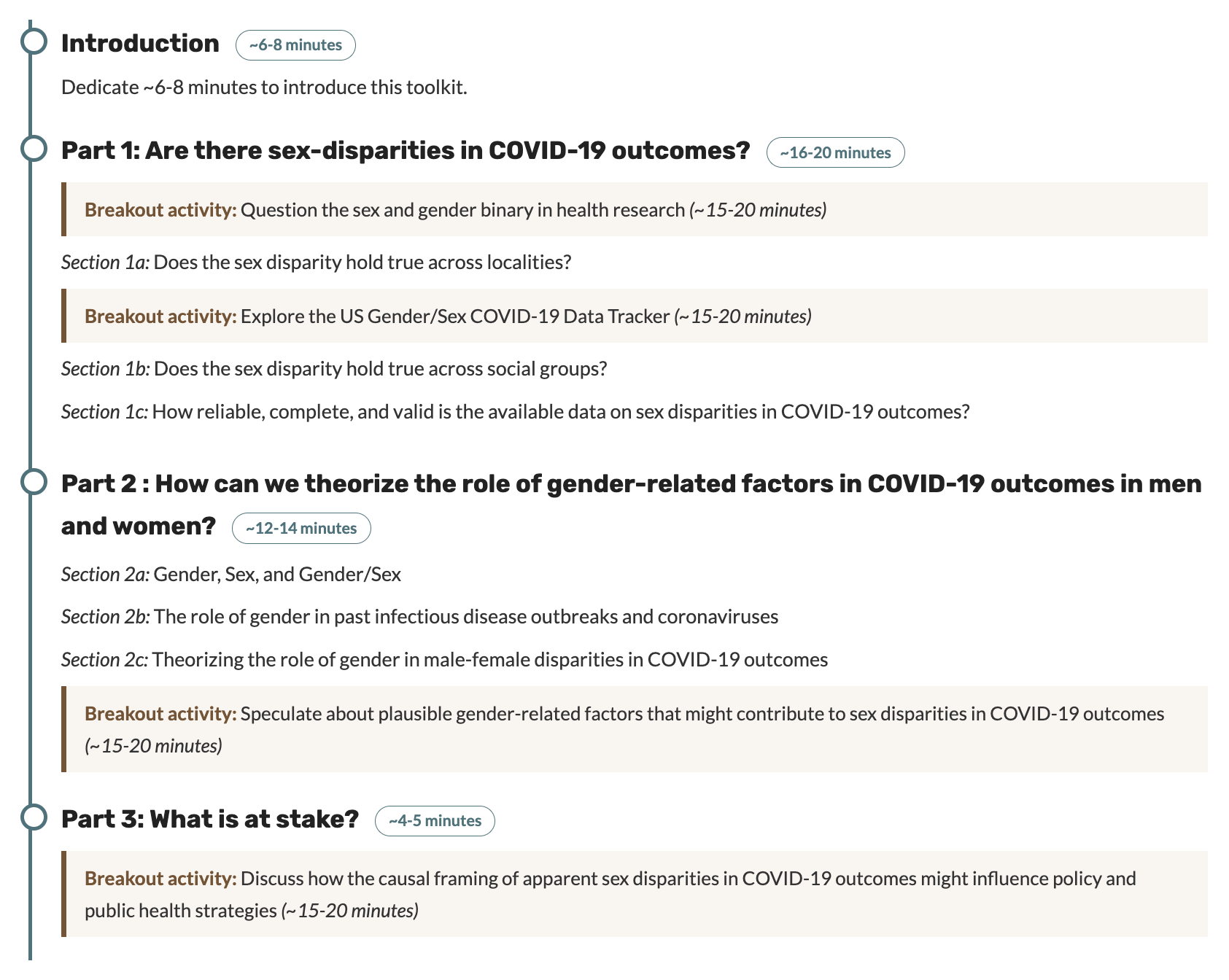
Given the adaptable nature of this toolkit, timing estimates are provided separately for lecture slides and breakout activities.
The total speaking length of the presentation is approximately 40 minutes. The toolkit has been designed to allow for adaptation to different classroom contexts and is written for introductory and interdisciplinary audiences across the humanities, social sciences, and sciences. The slide presentation consists of an introduction and three self-contained units (Part 1, Part 2, and Part 3) that can be taught together or independently of each other. The introduction should always be covered in class. Once the introduction is covered, instructors can choose to focus on any of the three self-contained units without losing internal consistency.
The toolkit also suggests a number of small-group breakout activities to promote active learning and participation. Each of the four break-out activities can be completed in approximately 15-20 minutes. This structure encourages critical thinking about the interpretation of scientific data and social categories. The breakout activity slides are clearly flagged: instructors are encouraged to select the breakout activities that best suit the needs of their students or the structure of their course.
Suggested Assigned Readings
Shattuck-Heidorn, H., Reiches, M. W., & Richardson, S. S. (2020, June 24). What’s really behind the gender gap in COVID-19 deaths? The New York Times. https://www.nytimes.com/2020/06/24/opinion/sex-differences-covid.html.
Danielsen, A. C., & Noll, N. E. (2020, June 24). Communicating about COVID-19 and sex disparities: A guide for media, scientists, public health officials, and educators. GenderSci Blog. https://www.genderscilab.org/blog/covid-communication.
Chotiner, I. (2020, April 14). Interview with Dr. Nancy Krieger: The interwoven threads of inequality and health. The New Yorker. https://www.newyorker.com/news/q-and-a/the-coronavirus-and-the-interwoven-threads-of-inequality-and-health.
Islam, N., Khunti, K., Dambha-Miller, H., Kawachi, I., & Marmot, M. (2020). COVID-19 mortality: A complex interplay of sex, gender and ethnicity. European Journal of Public Health. https://academic.oup.com/eurpub/advance-article/doi/10.1093/eurpub/ckaa150/5879989.
Companion Resources
April 13, 2020 to November 29, 2021 · 50 states and 2 territories
Weekly and cumulative sex-disaggregated cases and deaths, manually extracted from state health departments. Includes case and mortality rates, age-adjusted rates, a time series, and a full data table.
Archived
US Gender/Sex COVID-19 Data Tracker
Launched July 2020 · Health Affairs Blog
Grades states on the social and demographic detail in their surveillance reporting. The April 2021 rubric scores fatalities, hospitalizations, and vaccinations across five variables (15 points).
Archived
US State COVID-19 Report Card
COVID-19 Gender/Sex Disparities Frequently Asked Questions
-
No. Cover the introduction, then choose any of the three units, alone or together, plus whichever breakouts suit your course.
-
No. It reported data from April 2020 to November 2021 and is kept as an archive for teaching and research.
-
Yes. The data and cases used are from the U.S., but the analytical principles can be applied to gender/sex disparities in other contexts.
-
Please use the slides as downloaded, and retain the logo and cite if using only some slides.
Sex Contextualist Frameworks
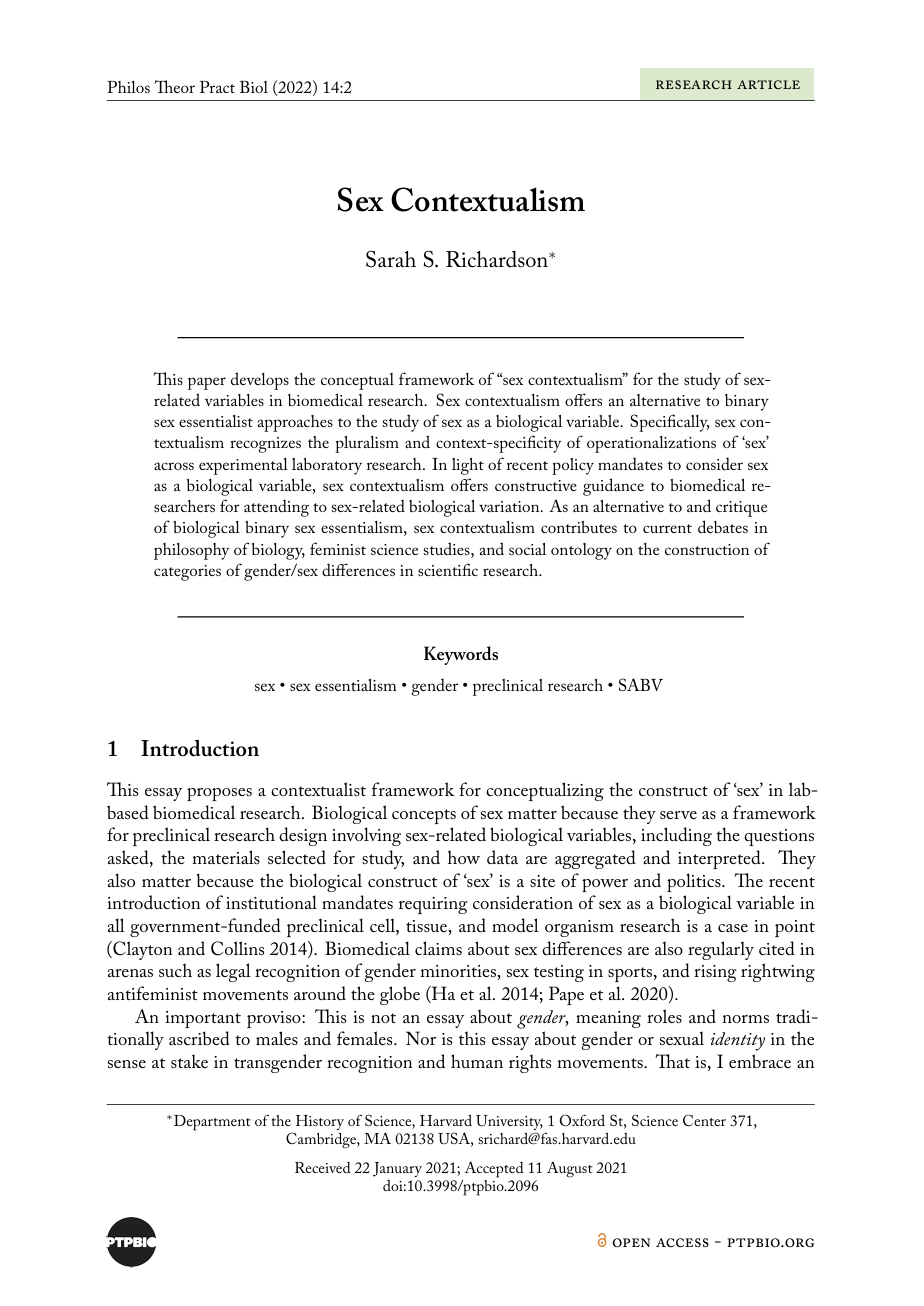
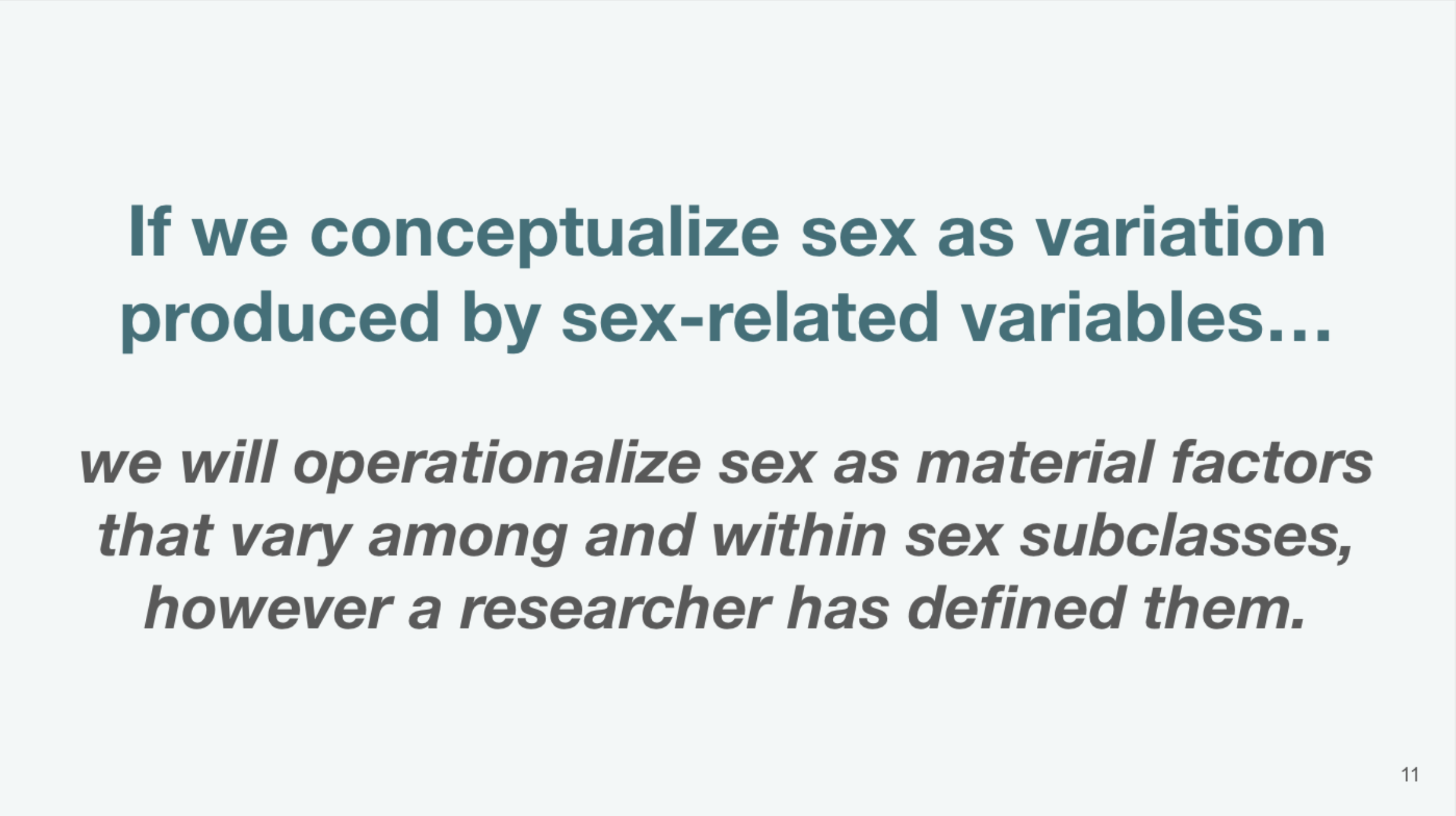
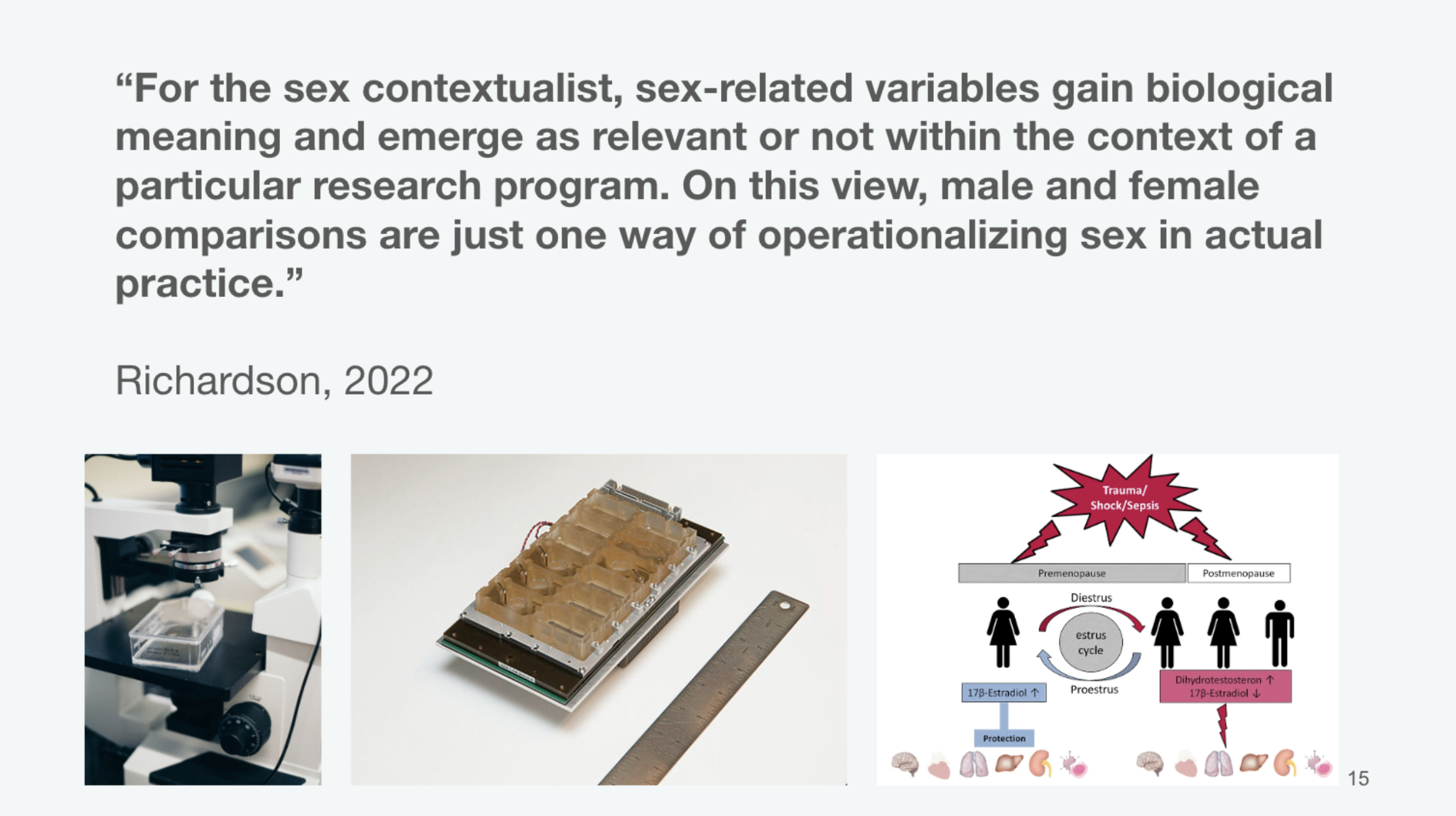
Proposed by Sarah S. Richardson in her 2022 paper, sex contextualism is a framework for operationalizing and analyzing sex in a way that attends to its pluralist, context-specific forms across biomedical research. We offer a beginner-friendly teaching slide deck and research handout to equip researchers, educators, and students with critical tools for understanding sex contextualism as a meaningful conceptual and practical framework.
Sex Contextualism
SUGGESTED PAPER CITATION
Richardson, S. S. (2022). Sex contextualism. Philosophy, Theory, and Practice in Biology, 14, Article 2. https://doi.org/10.3998/ptpbio.2096ttps://doi.org/10.3998/ptpbio.209
Teaching Slide Deck
The following slidedeck:
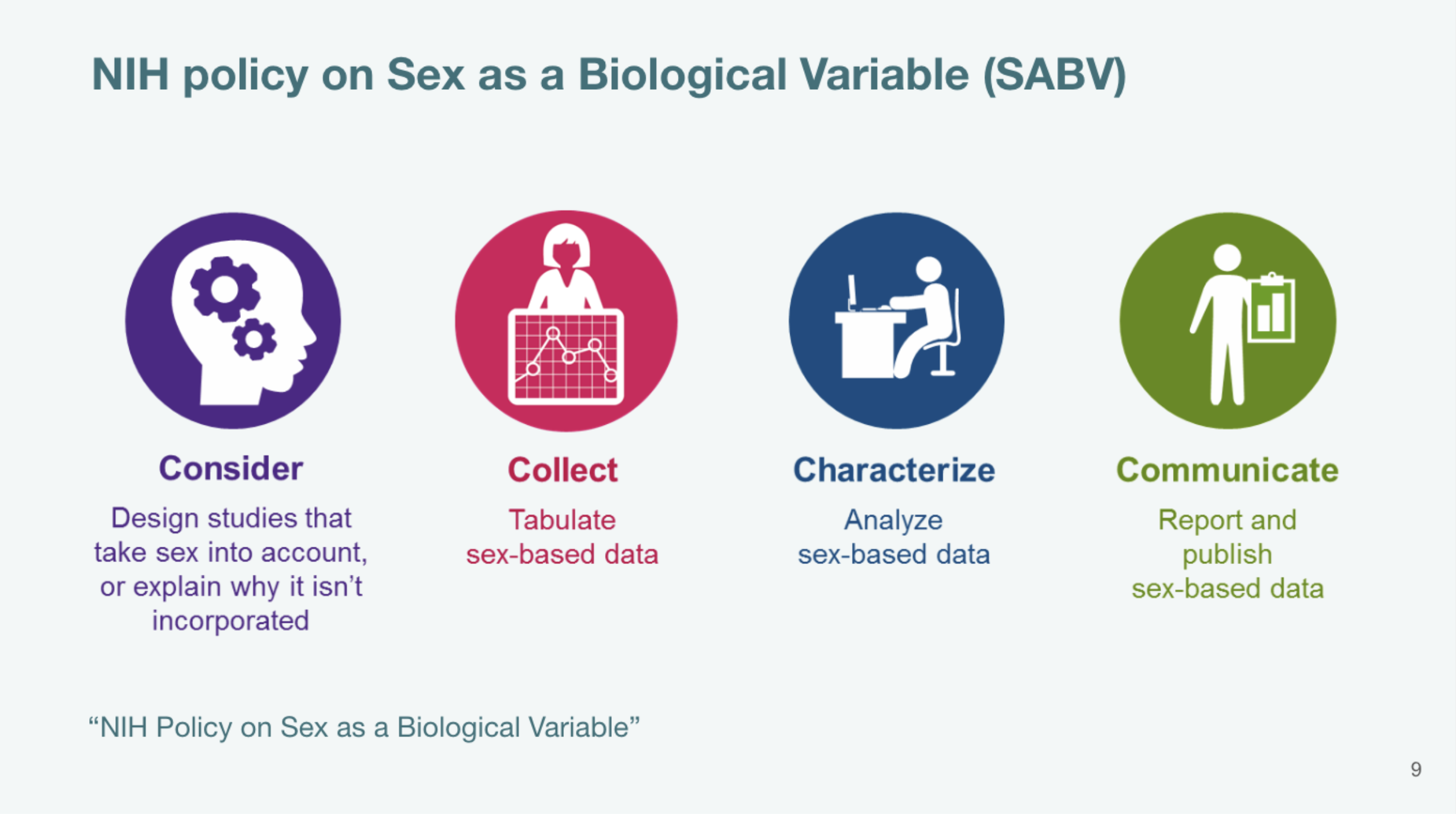
addresses the motivation for, and pitfalls of, attending to sex-related variation;
explains sex contextualism in contrast to sex essentialism;
touches on the practical implications for laboratory scientists.
It suits intro biology, feminist science studies, and philosophy of biology classes, and other teaching settings.
SUGGESTED GENERAL SLIDE DECK CITATION
GenderSci Lab. (2022, April). Sex contextualism: Teaching slidedeck by Harvard University’s GenderSci Lab. https://www.genderscilab.org/gendersci-lab-methods-toolkit
Using the slides: please don’t alter them after download. If you use only a portion, keep the GenderSci Lab logo and cite appropriately.
STATEMENT OF INTELLECTUAL LABOR
Sarah Richardson wrote this teaching module using materials from her own presentations and a presentation that Marina DiMarco, Mia Miyagi, and Kelsey Ichikawa created. Kelsey Ichikawa formatted and captioned the module and wrote this blog introduction that this teaching module took inspiration from.
FOR CITING SELECTED SLIDES ONLY
GenderSci Lab. (2022, April). Sex contextualism: Teaching slidedeck by Harvard University’s GenderSci Lab (Slides x, y, z). https://www.genderscilab.org/gendersci-lab-methods-toolkit
Research Handout for Scientists
The following research handout is a condensed, portable, 1-page document that answers common questions about sex contextualist approaches in experimental design, execution, and reporting. We invite you to read it over and share it with other researchers.
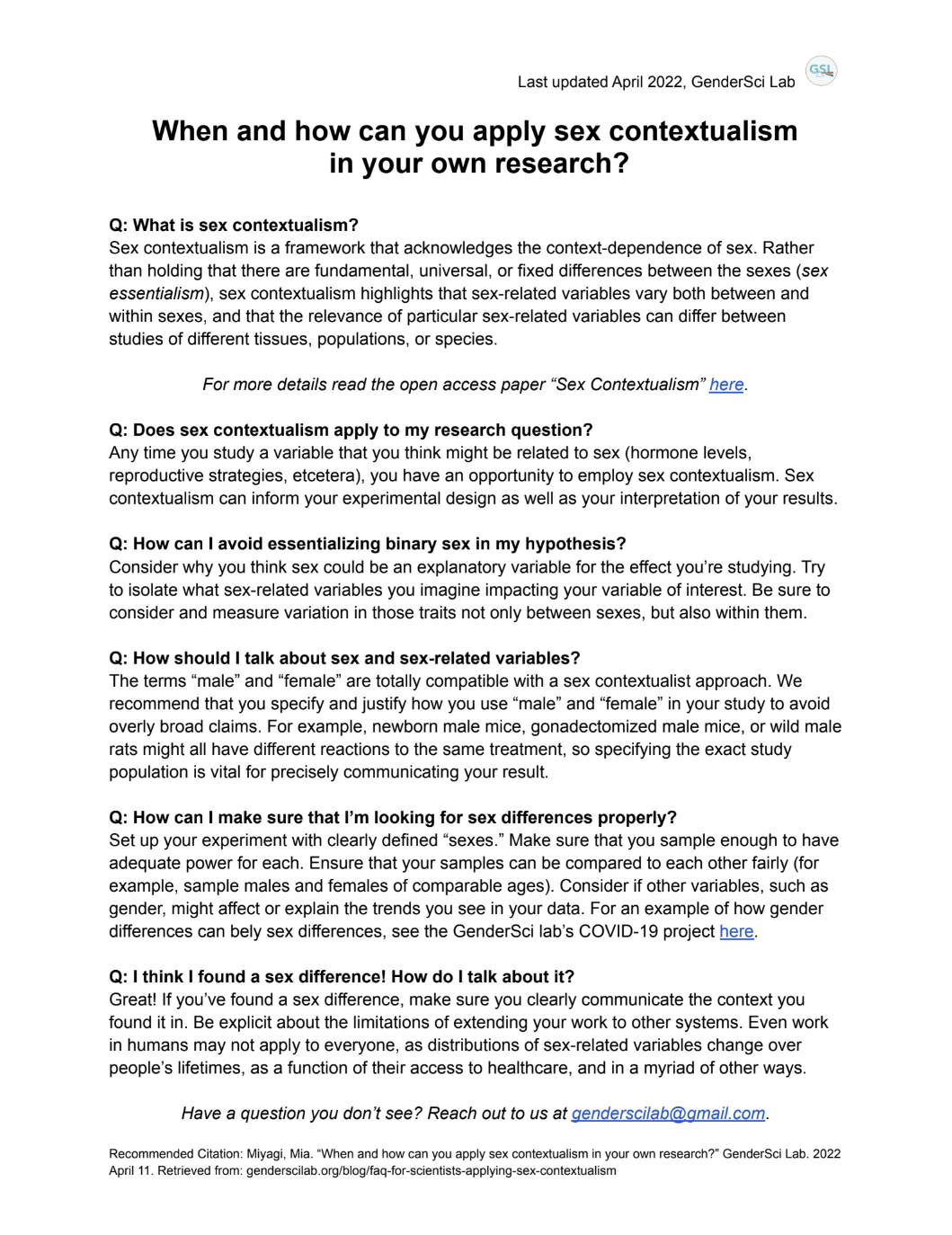
SUGGESTED HANDOUT CITATION
Miyagi, M. (2022, April 11). When and how can you apply sex contextualism in your own research? GenderSci Lab. https://www.genderscilab.org/gendersci-lab-methods-toolkit
STATEMENT OF INTELLECTUAL LABOR
Mia Miyagi conceived of, wrote, and revised the document. Sarah Richardson, Marion Boulicault, Kelsey Ichikawa, and Heather Shattuck-Heidorn contributed edits and revision feedback.
Sex Essentialist vs. Sex Contextualist Frameworks
Two ways to conceptualize sex as a biological variable, as contrasted in Table 1 of Richardson’s sex contextualism paper.
CENTRAL CONCERN
Studies using material from one sex may not generalize to the other.
__________________________________________________________________________________________________________________________________________________________________
OMNIPRESENCE
Every biological system and material has a sexual identity, male or female.
__________________________________________________________________________________________________________________________________________________________________
POLICY GUIDANCE
Include male and female subjects or material and report differences between the two groups.
Sex Essentialism
CENTRAL CONCERN
Sex-related variables produce variation between and within sex-defined classes, depending on context. Male–female findings may not generalize to all males and females, or across species.
__________________________________________________________________________________________________________________________________________________________________
OMNIPRESENCE
The presence of sex-related biological variables in a material does not entail a causal relation to sex-specific biology, nor does it necessarily warrant a definitive label of “male” or “female” sex to that material.
__________________________________________________________________________________________________________________________________________________________________
POLICY GUIDANCE
Consider sex-related variation within a well-specified research context; male–female comparison may be neither necessary nor sufficient in capturing sex-related biological variation.
Sex Contextualism
How to Apply Sex Contextualism:
Before you operationalize sex, be explicit about what you mean.
Which sex-related material factors (hormonal milieu, gonadal anatomy, developmental pathway) am I actually studying?
Are my subclasses discrete or continuous, and how many are there?
Step 1
Define it
Explain why this operationalization fits your context.
Does it fit my species or strain, developmental stage, and level of analysis (cell, tissue, organism)?
Is male–female comparison apt here, or is another grouping (e.g., estrogen level) a better fit?
Step 2
Justify it
Ask what your sex-related finding can and can’t support.
Would it generalize across model systems, species, or to humans?
Could lab conditions (caging, diet, observer sex, cycle stage) be mediating it?
Step 3
Test its limits
Sex Contextualism Frequently Asked Questions
-
No. Sex is an evolved developmental pathway with many implications for biology, and that male–female comparison may sometimes be an apt design.
-
Though Richardson’s paper focuses on “sex” in laboratory-based biomedical research, sex and gender interact in practice. For gender/sex in human data, see the Three Maxims section.
-
Please use the slides as downloaded, and retain the logo and cite if using only some slides.
-
Yes! You can access a Q&A with Lab Director Sarah Richardson on our blog at this link.
Suggested Citation
SUGGESTED WEBPAGE CITATION
GenderSci Lab. (2026). GenderSci Lab Methods Toolkit. https://www.genderscilab.org/methods-toolkit